
Reed Road Demolition Project
About
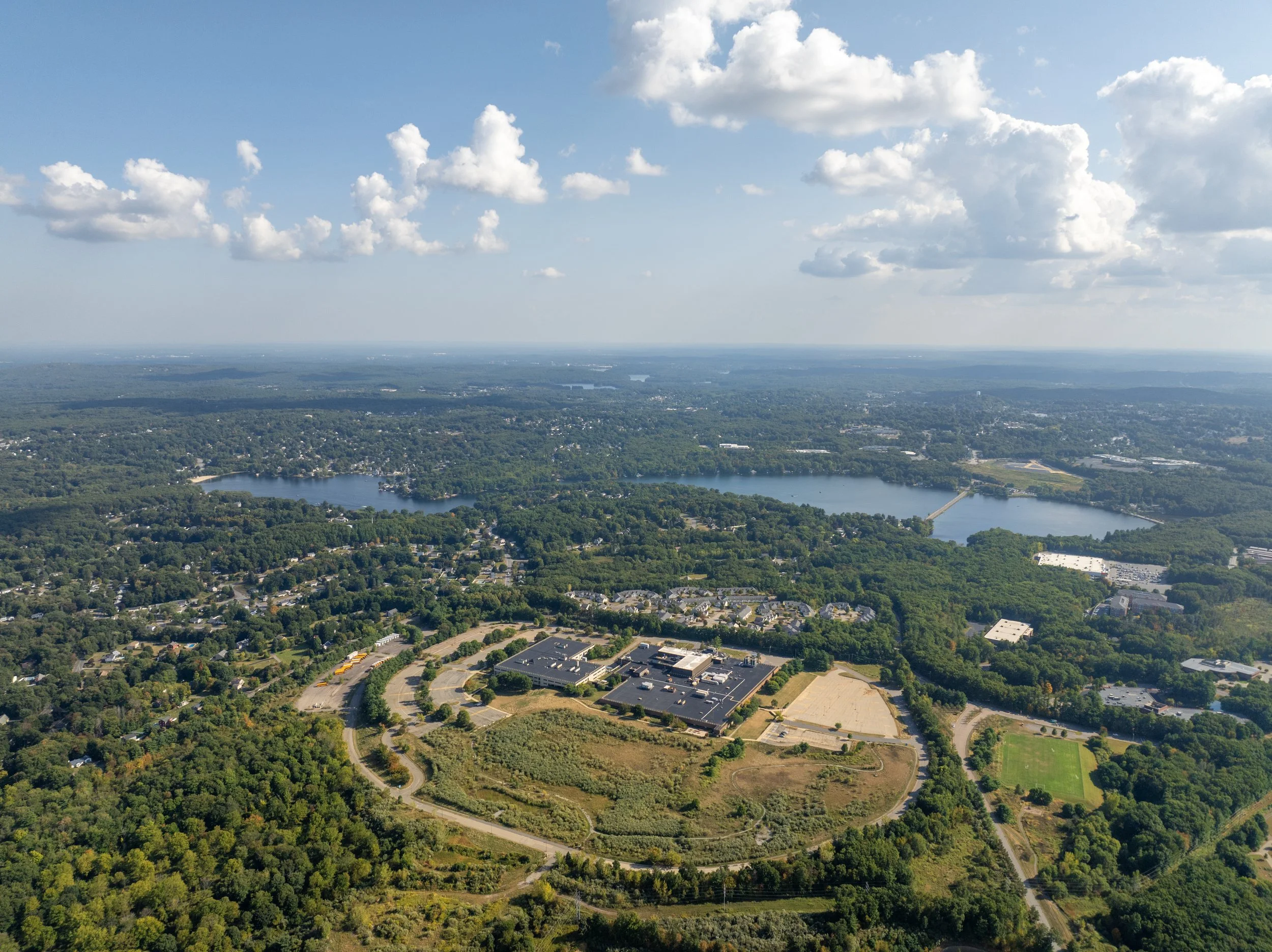
In Fall 2023, National Development acquired the 148-acre property located at 75 Reed Road in Hudson, Massachusetts, from Intel Corporation. Historically, the site served as a major regional hub for Intel, supporting both research and semiconductor fabrication operations.
Originally developed in the late 1970s by Digital Equipment Corporation, the property was transformed from a former apple orchard into a state-of-the-art technology campus. Intel further expanded the campus to over 1.3MM SF at its peak operation with over 3,000 employees reporting to the property daily.
Over the past decade, Intel gradually phased out its operations at the site, culminating in the demolition of its semiconductor fabrication facility in 2018. As part of the 2023 sale agreement, Intel entered into an 18-month leaseback with National Development and fully vacated the premises by May 1, 2025.
Following Intel’s departure, National Development elected to proceed with the full demolition of the two remaining buildings on site due to their age and deteriorating condition. Cranshaw Construction has been selected as the General Contractor to lead the demolition effort. Together, the two structures totaled approximately 700,000 square feet.
Updates
NEWS RELEASE: November 20, 2025
National Development Unveils Plan for Transformative Industrial Redevelopment in Hudson
Project Overview: The demolition project is expected to span approximately eleven months from start of site mobilization and pre-demolition activities, which began in May 2025.
During the pre-demolition phase, the project team prepared the structures for bulk demolition. National Development, in conjunction with the on-site general contractor, Cranshaw Construction, and all associated subcontractors, cooperated with the regulations established by the Massachusetts Department of Environmental Protection (MassDEP) to ensure the safe removal and proper disposal of all on-site materials. An Industrial Hygienist was also present to oversee and document the safe management of any existing hazardous materials.
The demolition phase commenced once all required state and local permits had been issued to Cranshaw Construction. The buildings are in the process of being methodically razed, beginning demolition on the north side and progressing southward, with water applied to active work areas to help minimize noise and dust impacts on neighboring communities. The buildings are expected to be completely leveled by the beginning of March 2026, with secondary demolition operations, including the crushing of existing concrete to satisfy BUD (Beneficial Use Determination) requirements, continuing from that point until the end of March 2026.
Upon completion of these demolition operations, the site will be fully cleared and prepared for subsequent redevelopment activities.
Upcoming Activities Include:
February 1 - 28, 2026: Demolition Phase
Sitework operations to continue, with the stripping and stockpiling of topsoil.
Demolition of HD2 is complete.
Demolition of HD1 is in progress.
Regulated removal and disposal of non-contaminated building materials is to continue.
Video Replay of Public Information Session, August 27, 2025:
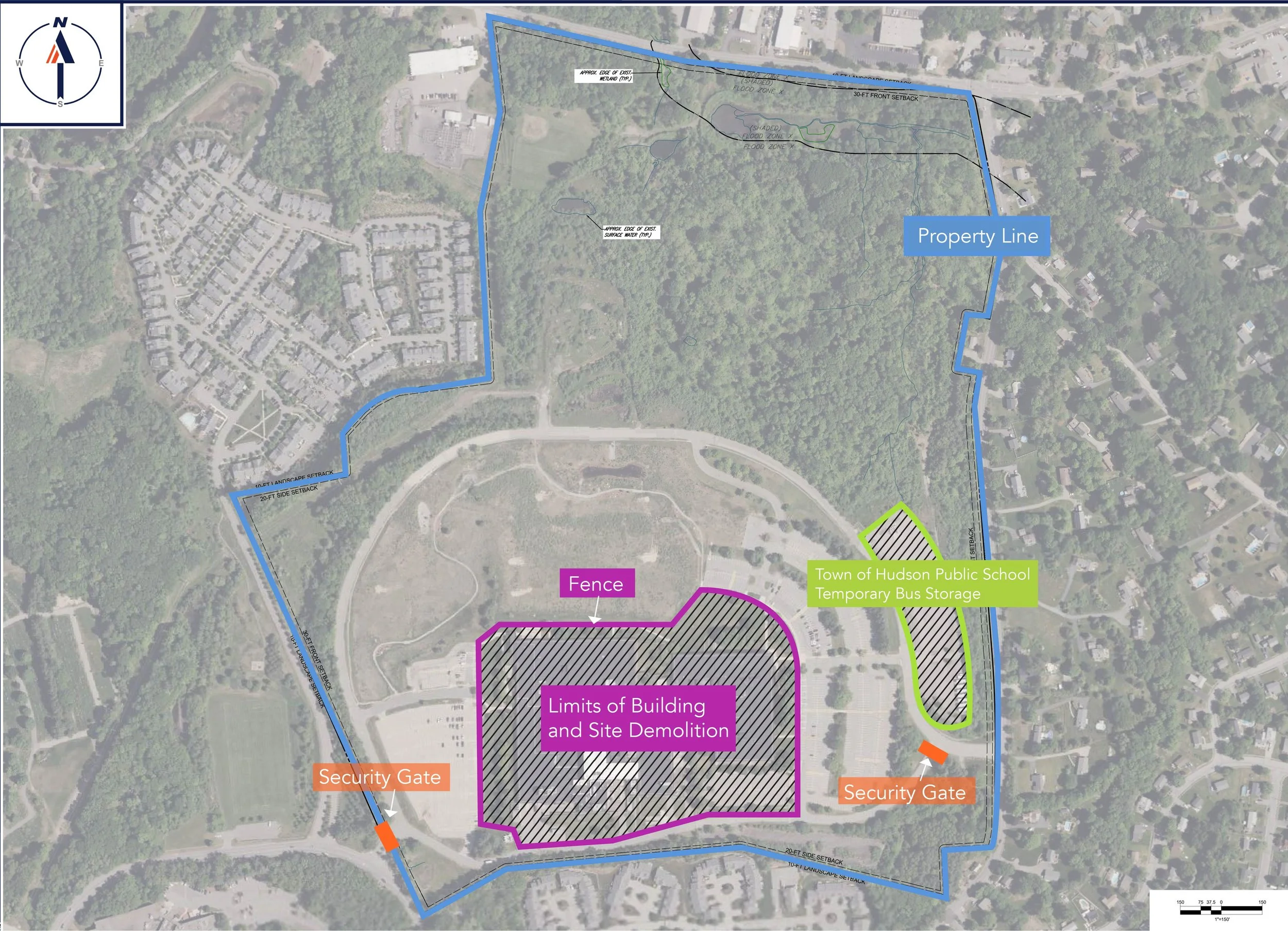
Demolition Site Plan
FAQ
-
Dust generated from building demolition activities will be continuously monitored by on-site construction professionals and controlled primarily through a wetting-down process, which involves spraying water to suppress airborne dust. The water will be sourced on-site and is sufficient to meet dust mitigation needs throughout the demolition phase.
-
Most of the demolition waste will be hauled off-site in accordance with the Commonwealth’s waste disposal regulations. However, a portion of the building’s clean concrete will be crushed on-site and reused as common fill material. This sustainable approach will reduce truck traffic by minimizing the need for off-site hauling and the delivery of new fill.
-
Given the proximity of nearby residences, the demolition contractor (selected in part for their experience with complex projects) has thoroughly assessed the areas of influence and developed a work plan tailored to the specific site conditions. While construction activities are expected to cause noise and vibration, professionals have carefully analyzed all impact zones and are confident the protocols in place will ensure that demolition is completed safely, responsibly and with careful consideration for both the job site and the surrounding community.
-
The demolition contractor assessed the site and has confirmed that the project will not impact the area’s groundwater.
-
Any water used for dust mitigation will be carefully managed to remain within the work zone, with protections in place for the storm drainage system. Demolition activities will not increase the risk of flooding or result in water leaving the property.
-
Residents have expressed concern about increased truck traffic near Westridge Road. We understand and share your concern, and will direct drivers to use extra caution when exiting onto Reed Road. Supplemental signage will also be installed to remind drivers to proceed carefully.
-
Demolition activities will be restricted to Hudson’s defined construction hours of 7 a.m. to 5 p.m. The contractor will use professional techniques to minimize noise during demolition; however, construction can be inherently noisy at times, and we appreciate your patience throughout this process. If particularly loud work is anticipated, we will post updates on our website and notify town officials.
-
The contractor will use professional demolition methods and dust mitigation techniques to help ensure that air quality impacts remain minimal. All work will comply with applicable public health standards and environmental air quality regulations governing building demolition.
-
The demolition project is expected to last approximately eleven months, beginning in May 2025 and concluding in March 2026.
-
The general contractor will have an on-site superintendent overseeing all demolition-related activities. Please direct all questions, comments, and concerns to the Town of Hudson, and we will work collaboratively to address them promptly.
-
Safety barriers, signage, and if necessary, flaggers may be used to ensure safe vehicle flow near the site entrances.